postmaster@museumofanthropocenetechnology.org
via Leggiuno 32
2014 Laveno Mombello
Italia
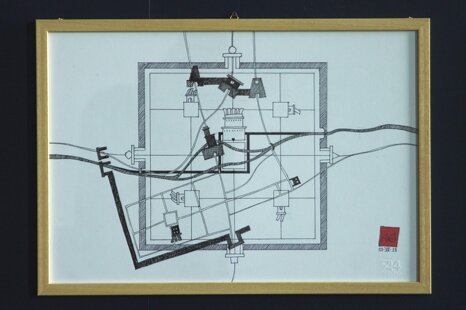
In his novel “Invisible Cities” of 1984, the Italian writer Italo Calvino describes the city of Eudoxia. It is a chaotic city with winding alleys, steps, bridges and dead ends. It holds a carpet in its town hall that is said to be the plan of the city. The carpet is laid out in symmetrical motives whose patterns are repeated along straight lines. The inhabitants of Eudoxia got used to say that they had not been able to construct their city according to the plan of the gods, shown in the design of the carpet. Only some brave people ventured the idea that the city is what it is: the result of the usual messy endeavours by humans, and that the gods, in their perfection, have not been able to capture the complexity of the real city.
Similarly, Modernity, i.e.: the thinking during the Anthropocene, with its clear but theoretical divisions between rationality and emotion, between nature and culture, science and art, ... has not been able to capture the complexity of the real world (see Cat. Nr. 48).
Cat. Nr. 19
EUDOSSSIA
52017, Frank Raes
30 x 40 cm: paper, ink